


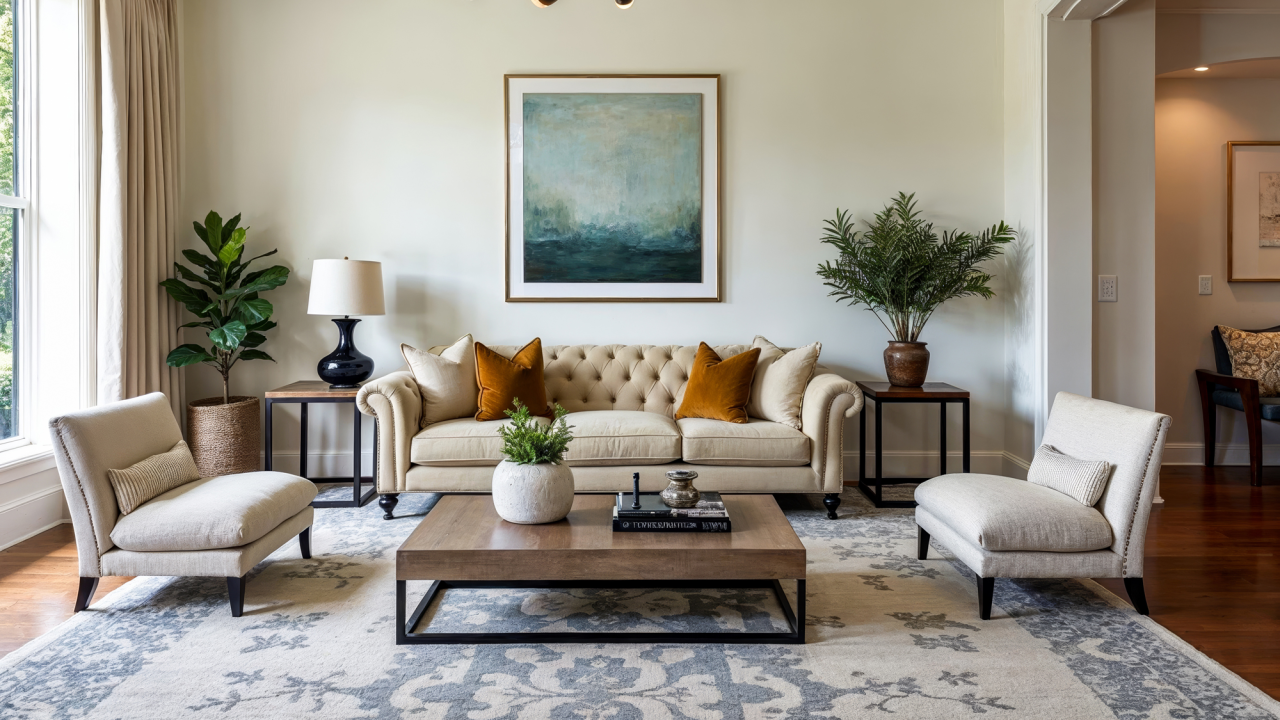
Historic homes across Wayne, Pennsylvania, tell a rich architectural story. From grand Victorian homes near North Wayne Avenue to stone Colonial Revivals tucked away off Sugartown Road, these properties feature original craftsmanship that modern construction rarely replicates. Original hardwood floors are often the centerpiece of these historic interiors, but protecting those aged planks while creating a cozy, refined living environment requires a thoughtful approach. Custom area rugs provide the ideal balance, allowing homeowners to preserve historic flooring while introducing warmth, color, and structure to uniquely shaped historic rooms.
Respecting Main Line Architectural Heritage
Designing within a historic home requires an understanding of scale, architectural detail, and light. Many older properties in Wayne feature non-standard room dimensions, unexpected alcoves, large hearths, and original trim work that standard off-the-rack rugs simply cannot accommodate. A pre-made rug often ends up covering beautiful decorative floor borders or hanging awkwardly across narrow doorways.
Custom area rugs allow you to design down to the exact inch. By framing the room rather than hiding it, a custom rug highlights original wood borders, inlay detailing, and hearth bases while softening the acoustic reflections common in older structures with plaster walls and high ceilings.
Sizing and Proportion for Historic Floor Plans
Achieving proper balance is the secret to successful floor styling in classic properties. In formal living rooms and parlors, an area rug should anchor the seating arrangement, leaving a clean border of exposed hardwood around the perimeter of the room—typically 12 to 18 inches.
Formal Living Rooms: Position key furniture pieces with at least their front legs on the rug to tie the seating area together visually.
Dining Rooms: Ensure the rug extends at least 24 inches beyond all sides of the dining table so chairs remain on the rug even when pulled out.
Staircases and Entry Halls: Custom runners tailored for curved or grand staircases protect high-traffic steps while accentuating traditional woodwork.
Choosing Fibers and Textures That Last
The choice of fiber determines both the longevity and texture of your custom rug. Historic Wayne homes often see active family life, making durability as critical as visual charm.
Natural Wool: Wool remains the premier choice for traditional homes. It offers natural soil resistance, exceptional resiliency under heavy furniture, and a rich, soft texture underfoot.
Wool Blends: Combining wool with synthetic fibers provides added stain resistance and durability, making it ideal for busy hallways and family rooms.
Patterned Cut-Piles and Loop Constructions: Textured loops and patterned weaves create visual depth, masking everyday foot traffic while complementing historical wallpapers and trimwork.
Tailoring Your Rug with Custom Borders and Edge Finishes
The finishing touches define a custom rug. Wide fabric bindings, hand-pinstriped edges, or narrow cotton surging transform a simple piece of carpet into a bespoke centerpiece. Wide canvas or leather borders work exceptionally well in stone Colonials, grounding the space with rich, earthy textures. For formal Victorian parlors, delicate serged edges or tonal fabric bindings keep the focus on subtle carpet patterns without overpowering ornate moldings.
Custom area rugs elevate the beauty of your historic property while preserving its original flooring for generations to come.


